Seeing trendy powder sticks everywhere might make you question if capsules are outdated. You worry about choosing the wrong delivery form, impacting your product's stability and your customer's trust. Let's look beyond the hype to see what really delivers.
Powder sticks are great for large doses and taste, but capsules remain the gold standard. They offer superior protection for sensitive ingredients, precise dosing, and a cleaner formula.1 This makes them essential for high-efficacy and clean-label supplements. The choice depends on your product's specific needs.
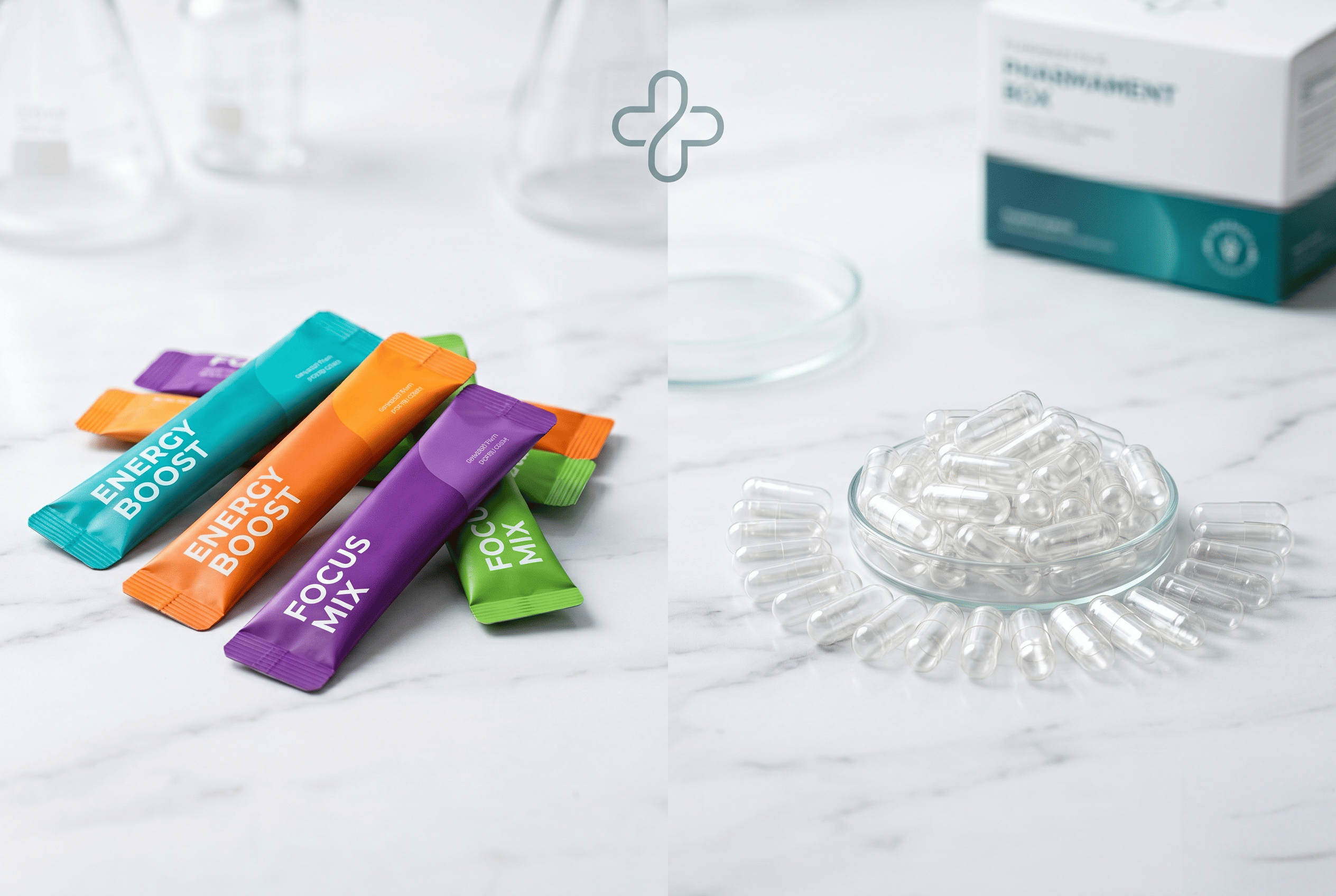
I've seen the buzz on social media. Influencers are mixing colorful powders into their water bottles, and it looks great. It makes you wonder if the humble capsule has lost its place. But from my two decades in this industry, I can tell you that what you see on the surface isn't the whole story. The real decision isn't about trends; it's about performance and delivering the best result to your customer. Let's dig into what really matters.
Are Capsules Just Containers, or Are They Advanced Ingredient Protectors?
You have a sensitive ingredient like a probiotic that you want to bring to market. You worry that a powder stick format will expose it to moisture, degrading its potency before it even reaches the customer. Understand that capsules act as a protective shield.
A capsule is far more than a container; it’s a precision-engineered micro-environment. It shields sensitive ingredients from oxygen, moisture, and light.2 For ingredients needing to bypass the stomach, enteric-coated capsules provide a physical barrier3 that powder sticks simply cannot match, ensuring targeted delivery and maximum efficacy.

Let's get technical. When we talk about ingredients like hygroscopic plant extracts4 or specific probiotic strains, stability is everything5. A powder stick has a massive surface area.6 The moment it's opened, it's exposed to the environment. This is a huge challenge for formulators. I remember a client who struggled with a probiotic powder that was clumping due to moisture absorption, leading to customer complaints and returns.
Capsules solve this problem elegantly. They are not just shells; they are sealed fortresses. This is critical for maintaining the integrity of the formula from our factory to your customer's hands. Here's a breakdown of their protective roles:
| Protection Feature | Capsule Advantage | Powder Stick Challenge |
|---|---|---|
| Moisture Barrier | The sealed environment minimizes exposure to humidity. | The high surface area increases the risk of moisture absorption and clumping.7 |
| Oxygen Barrier | It protects oxygen-sensitive compounds from degradation. | Exposure during mixing and consumption can reduce potency.8 |
| Targeted Release | Enteric coatings allow ingredients to bypass stomach acid. | Ingredients are immediately exposed to the entire GI tract. |
Furthermore, from a supply chain perspective, capsules are more robust. They can handle a wider range of temperatures and humidity during shipping, which is critical for global distribution. A powder stick's packaging must have extremely high barrier properties, which adds cost and complexity. The capsule's inherent structure provides a level of protection that is both effective and cost-efficient.
Is a Bigger Dose Always Better, or Does Delivery Efficiency Matter More?
Your product needs a large dose, like 3 grams of collagen. You know that customers hate swallowing multiple large capsules, which can hurt your product's appeal and repeat sales. You need to consider the concept of "dosage payload" and what's best for both the formula and the user.
Powder sticks excel at delivering a large "dosage payload," solving the issue of pill fatigue for high-volume ingredients. However, for potent, low-dose ingredients, capsules are far more efficient. They enable micro-dosing without the need for fillers, sweeteners, or flow agents often required in powders.
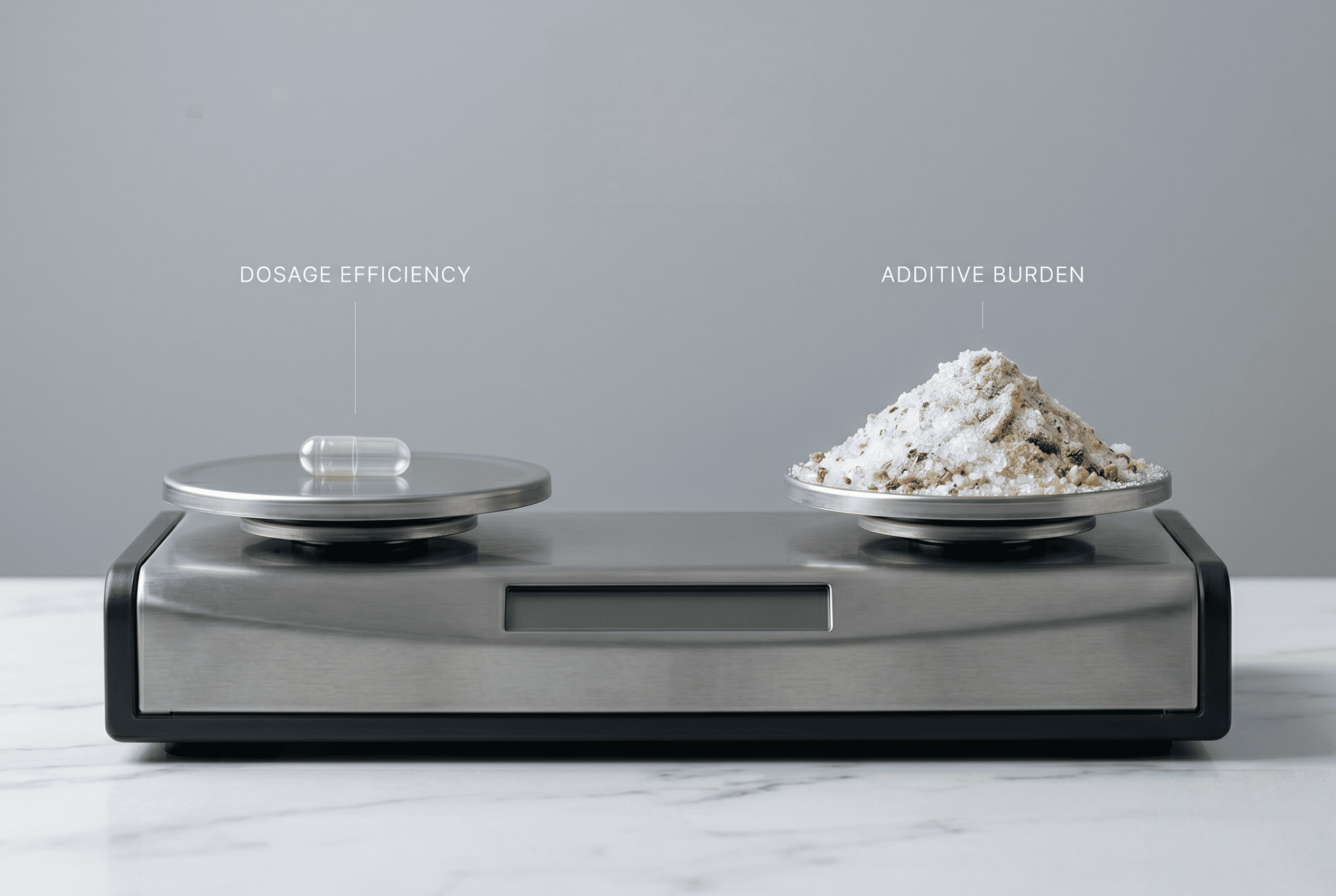
The rise of powder sticks was driven by a real consumer pain point: swallowing a handful of pills.9 For something like collagen or certain amino acids where you need several grams, a powder is a smart solution. But this has created a perception that "more is more." I always ask my clients to think about delivery efficiency. If your active ingredient is effective at just 200mg, putting it in a 5-gram powder stick means over 95% of that stick is something else—what I call the "additive burden."
This is a critical point for product developers. The extra ingredients in powders aren't just for show; they're needed to make the product work on a production line and taste good.
Understanding the Additive Burden
| Delivery Form | Typical Additives | Purpose |
|---|---|---|
| Powder Stick | Sweeteners (Sucralose, Stevia), Flavorings, Flow Agents (Silicon Dioxide), Bulking Agents (Maltodextrin)10 | Improve taste, prevent caking, add volume. |
| Capsule | Minimal to none. Sometimes a small amount of excipient for filling consistency. | Ensure accurate dosing and stable filling. |
This is where we, at Renhe Capsule, focus our innovation. We've perfected our manufacturing to reduce capsule wall thickness tolerance. Why does this matter? For brands that tried powders but want to return to capsules for a cleaner formula, our capsules provide a more consistent and reliable filling process. A stable filling run means less product loss and higher accuracy, directly impacting your bottom line. It proves that efficiency isn't just about the dose; it's about the entire manufacturing process.
Will Clean Label Trends Make Capsules the Ultimate Choice?
Customers are demanding cleaner, simpler ingredient lists every day. You might find that your powder stick formula is full of artificial sweeteners and flavors, which could soon become a liability for your brand. It's time to look to advanced capsules as the future of clean label supplements.
As regulations tighten and consumers demand transparency, the clean label movement is gaining momentum.11 High-quality capsules, especially those that are TiO2-free and SLS-free, offer the perfect path to a minimal-ingredient product. They deliver efficacy without the additives often found in taste-dependent powder sticks.
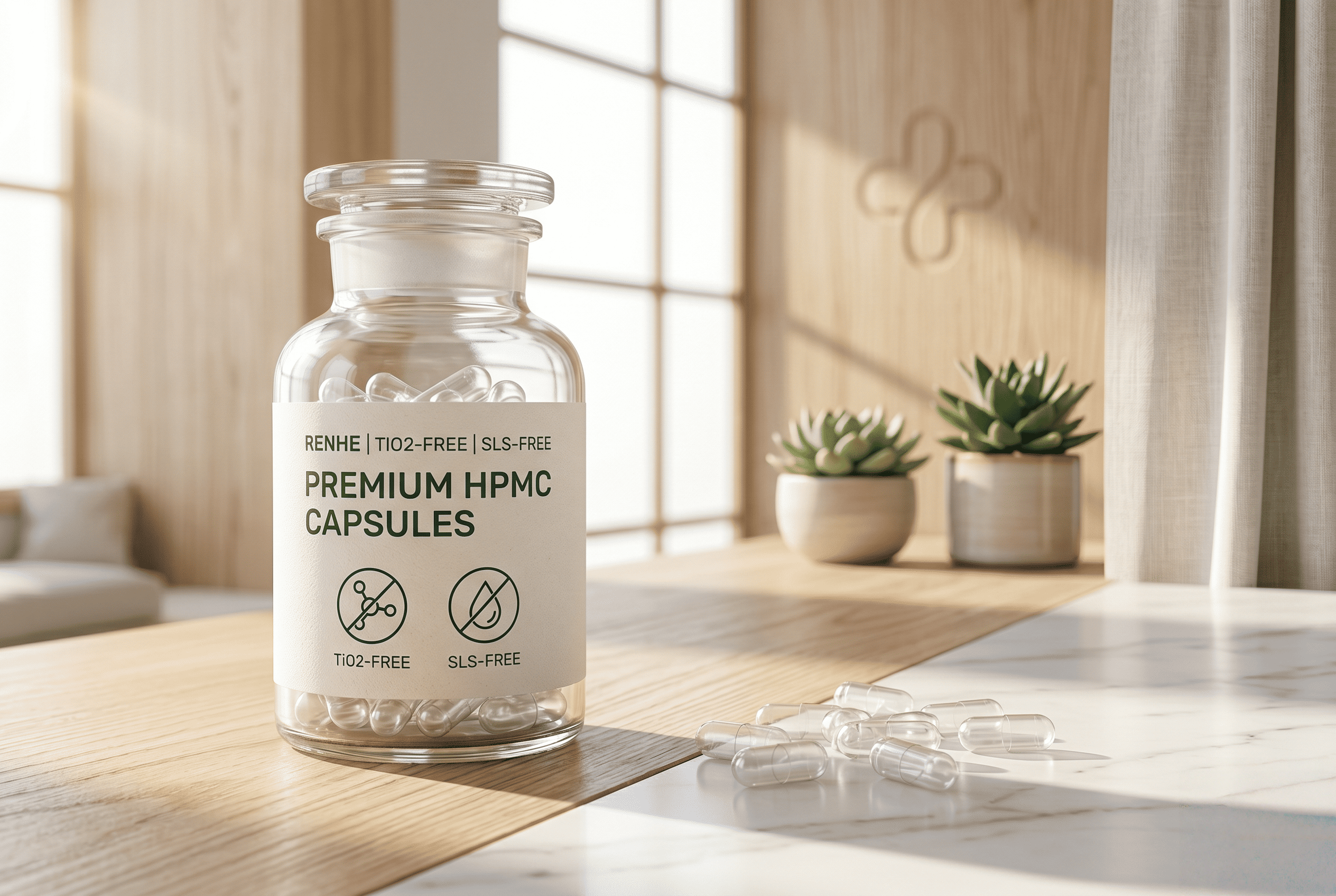
The future of supplements is clean. I've seen a massive shift in the last few years. Regulators and, more importantly, consumers are scrutinizing labels. Terms like Titanium Dioxide-free12 and SLS-free are no longer niche; they're becoming the standard. This is where the strategic advantage of capsules becomes undeniable. We made the call years ago to invest in TiO2-free technology because we saw this trend coming. While powder stick formulators are focused on masking the taste of active ingredients with a long list of flavorings and sweeteners, the capsule industry is focused on purity.
Let's segment the target consumer to see how this plays out for brand strategy:
| User Profile | Preferred Form | Key Motivators | Brand Strategy |
|---|---|---|---|
| The Portable Social User | Powder Stick | Convenience, taste, shareability on social media. | Offer trendy flavors and focus on the "experience." |
| The Scientific Rigorous User | Capsule | Purity, dosage precision, proven efficacy, clean label. | Highlight ingredient sourcing, certifications, and "free-from" claims. |
For brands targeting the "Scientific Rigorous User," a high-quality HPMC or gelatin capsule is the most direct way to deliver an active ingredient with almost nothing else. As we move toward 2026, I predict that brands leading with "zero unnecessary additives" will win significant market share. The capsule isn't just a delivery method; it's a statement of your brand's commitment to quality and purity.
Conclusion
Powder sticks and capsules aren't rivals; they are complementary tools. Sticks serve the social, high-dose market, while capsules remain the gold standard for precision, purity, and protecting potent ingredients.
A pharmaceutics textbook, review, or regulatory source can substantiate capsule advantages in protection and dose accuracy. ↩
A neutral pharmaceutics source can confirm the protective role of capsule dosage forms and packaging against environmental degradation. ↩
A pharmaceutics or regulatory source can explain that enteric coatings delay release in gastric fluid and allow intestinal release. ↩
A formulation study or review on botanical extract powders can support the claim that certain extracts absorb moisture and face stability challenges. ↩
A scientific review can document how moisture, oxygen, temperature, and storage conditions affect probiotic viability. ↩
A pharmaceutical powder stability source can support the relationship between high surface area and moisture or environmental exposure. ↩
A food science or pharmaceutical powder source can support the link between moisture uptake, humidity, and powder caking. ↩
A review on oxidation or degradation of bioactive compounds can support the idea that environmental exposure may reduce potency. ↩
A consumer study or health research source can support that pill burden and swallowing difficulty affect adherence and dosage-form preference. ↩
A food formulation or regulatory ingredient-function source can verify the common use and purpose of these additives. ↩
A consumer research review or institutional report can support the trend toward clean labels and transparency. ↩
European food-safety and regulatory sources can explain why titanium dioxide-free claims have become relevant in clean-label products. ↩