Struggling with production after switching to HPMC capsules? Your batch weights seem off, causing high rejection rates. The issue isn't your formula; it's the capsule itself.
HPMC capsules are about 10-15% heavier than gelatin equivalents.1 This is due to HPMC's higher intrinsic material density2 and a design that optimizes wall thickness for mechanical strength3. This "density gap" is a critical factor that directly impacts filling machine calibrations and quality control testing4.
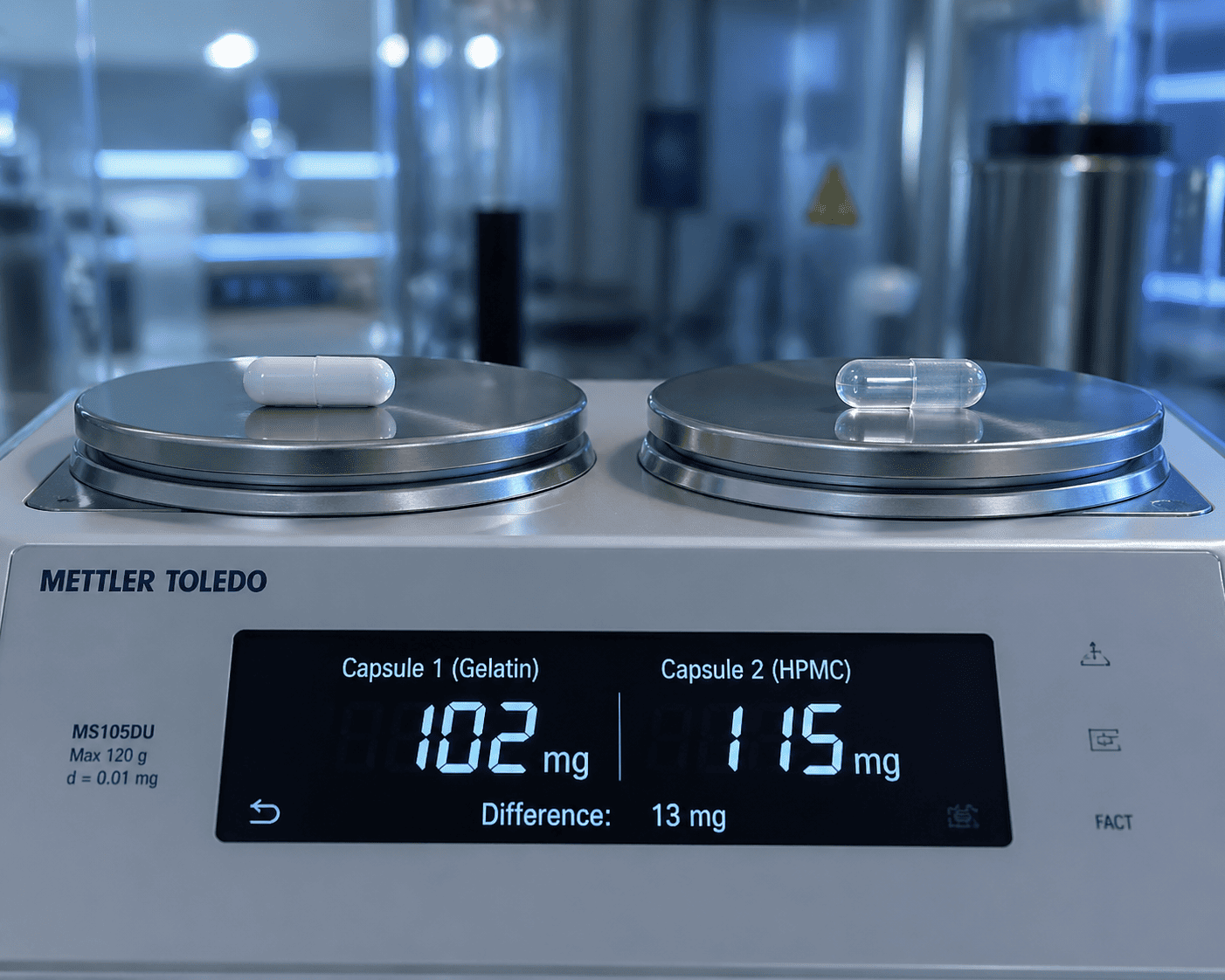
I've talked to many production managers who made the switch to plant-based capsules. They were excited about the benefits but quickly ran into frustrating problems on the filling line. They saw their rejection rates climb and couldn't figure out why. The answer was often hidden in a tiny detail they overlooked: the weight of the empty capsule. This small difference is more than just a number on a spec sheet. It's a fundamental shift that requires a new approach to your entire filling process. Let's break down what this density gap really means for your production.
How does this weight difference affect my production costs?
You see a tiny weight increase per capsule and think it's insignificant. But this can lead to thousands of perfectly good products being rejected, directly hitting your bottom line.
The 10-15% weight increase in HPMC capsules directly impacts your filling machine's tare weight calibration5. Failing to adjust this baseline can lead to false rejections for weight uniformity6, increasing waste and downtime. A precise specification sheet is crucial for accurate setup and cost control.
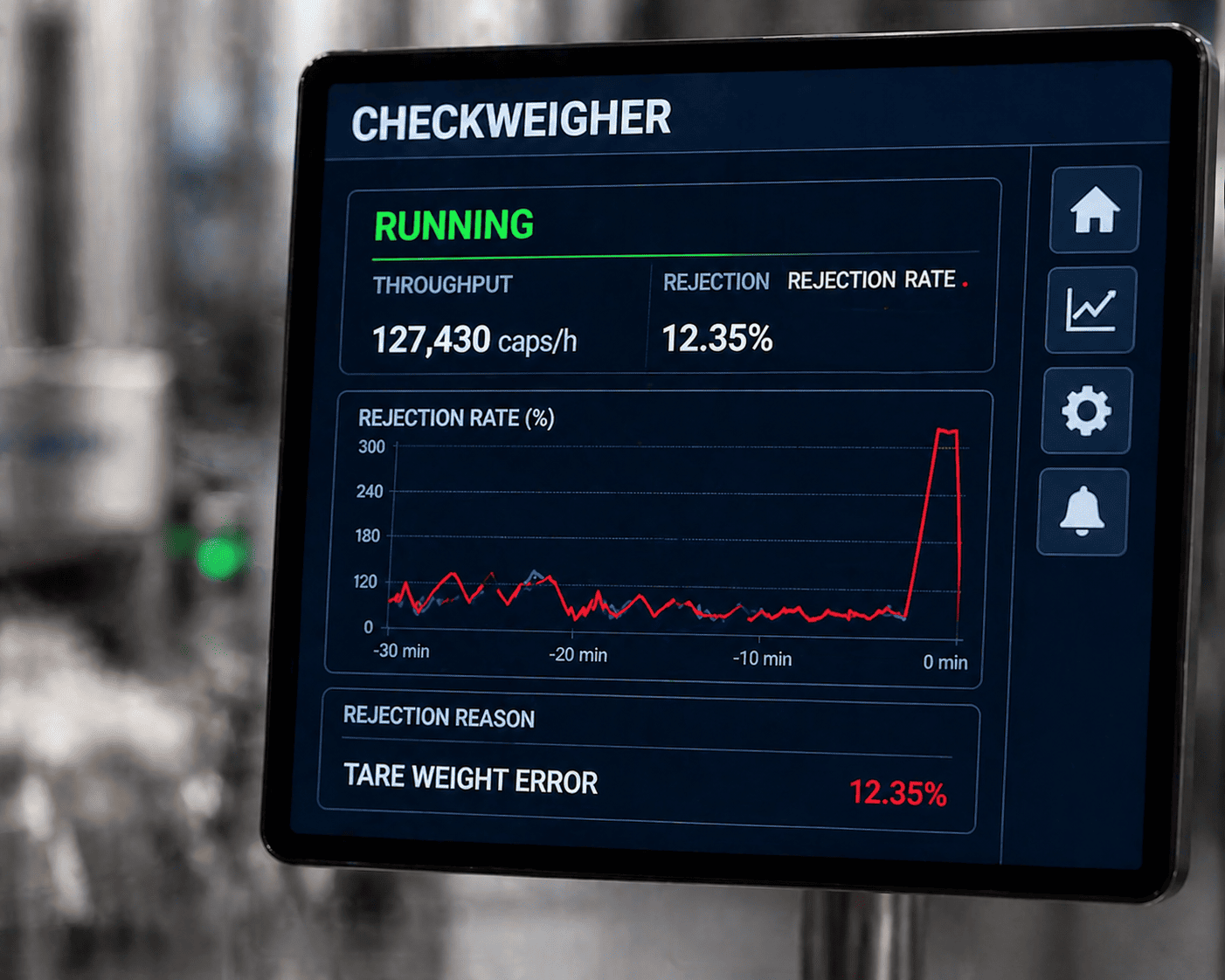
In my experience, this is the most common and costly mistake companies make. They set up their high-speed filling lines with the tare weight—the weight of the empty capsule—based on their old gelatin capsule data. The machine then fills the HPMC capsule and sends it to the online checkweigher. Because the empty HPMC capsule is heavier to begin with, the final filled weight might fall outside the pre-set acceptable range, even if the fill amount is perfect. The machine flags it as a defect and rejects it. I once worked with a client whose rejection rate shot up to 8% after switching. We traced it back to this exact issue. By simply providing them with our precise average weight tolerance, down to the milligram, and helping them recalibrate their systems, we brought that rejection rate back down to under 0.1%. This isn't just about supplying capsules; it's about providing the data that prevents hidden costs from piling up.
Is the extra weight just material, or is there more to it?
You might assume a heavier capsule is just thicker, leaving less room for your valuable formula. But a thin, brittle capsule that cracks on the line is a much bigger problem.
The added weight of HPMC capsules comes from a careful balance of material density and wall thickness uniformity. This design ensures superior mechanical strength for high-speed filling machines7, preventing cracks and breaks. It’s a feat of precision engineering, not just a simple material property.
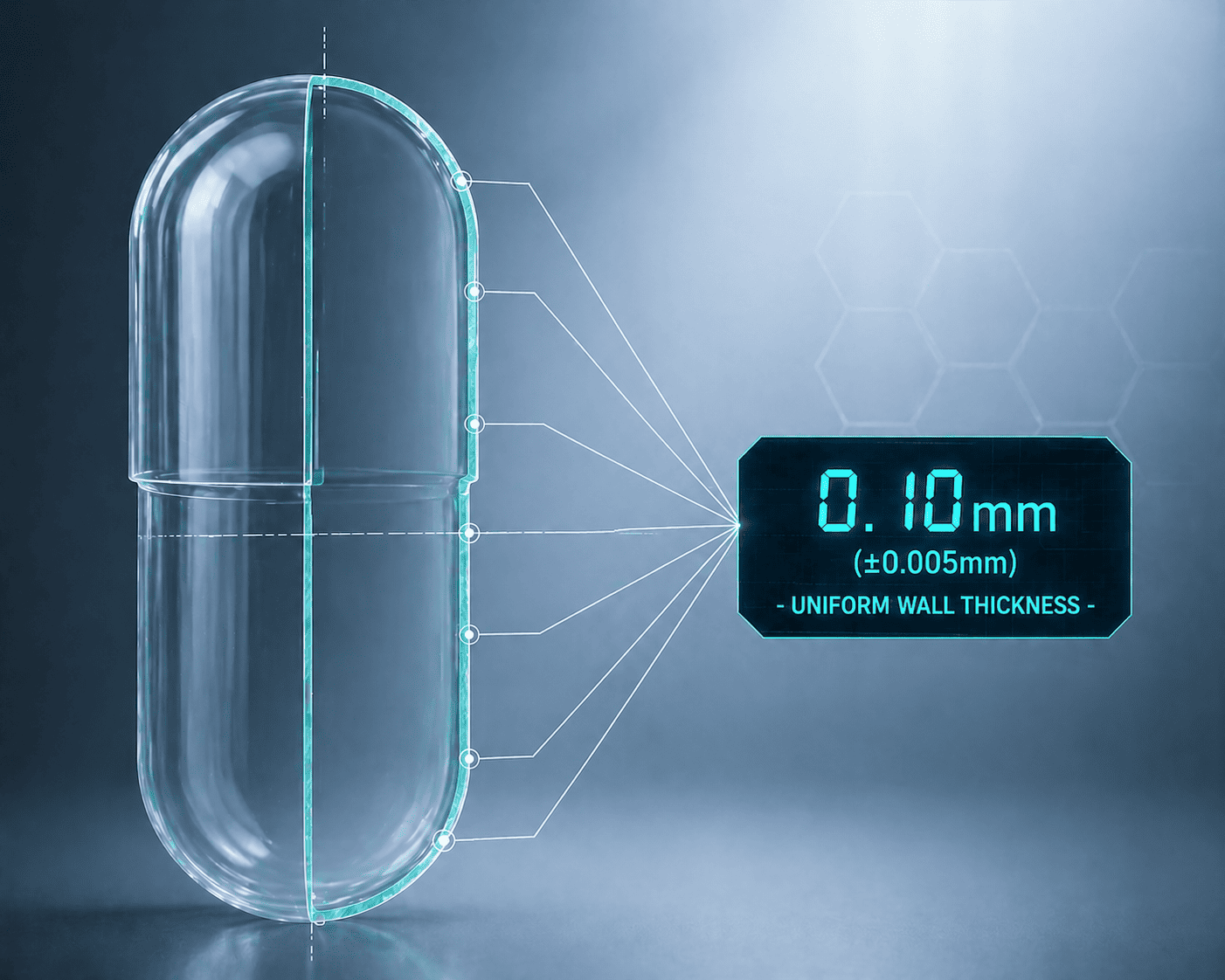
The reason HPMC capsules are heavier is twofold. First, the HPMC polymer itself is naturally denser than animal-derived gelatin8. But the second reason is where our manufacturing expertise comes in. We engineer the capsule wall thickness to be incredibly uniform and robust. This is a delicate balancing act. If the wall is too thick, it adds unnecessary weight and reduces the internal fill volume. If it's too thin, the capsule can become brittle and won't withstand the mechanical stress of a filling machine running at over 3,000 capsules per minute9. On these machines, the heavier HPMC capsule has slightly more inertia during vacuum pickup and orientation. Our design accounts for this, ensuring the capsule remains stable and doesn't crack. This precision prevents costly line stoppages. The density gap is a sign of a stronger, more reliable capsule built for modern manufacturing.
Gelatin vs. HPMC: Standard Weight Comparison
To make this clear, here is a table showing the typical weight differences across standard capsule sizes10. You can see the consistent 10-15% increase for HPMC.
| Capsule Size | Typical Gelatin Weight (mg) | Typical HPMC Weight (mg) | Approximate Weight Increase |
|---|---|---|---|
| #00 | 118 - 122 | 128 - 132 | ~10% |
| #0 | 96 - 100 | 104 - 108 | ~10% |
| #1 | 74 - 78 | 82 - 86 | ~12% |
| #2 | 61 - 65 | 69 - 73 | ~13% |
| #3 | 48 - 52 | 56 - 60 | ~15% |
| #4 | 38 - 42 | 45 - 49 | ~15% |
How do I avoid false test failures with heavier HPMC capsules?
Your weight variation tests for new HPMC capsules are failing, and you're frustrated. You might wrongly discard a perfectly good batch, wasting time, money, and resources.
HPMC capsules have a lower, more stable moisture content (4-6%) than gelatin.11 Applying gelatin's testing parameters from USP/EP standards without adjustment will lead to inaccurate weight variation results. You must adapt your quality control process to the unique properties of HPMC.
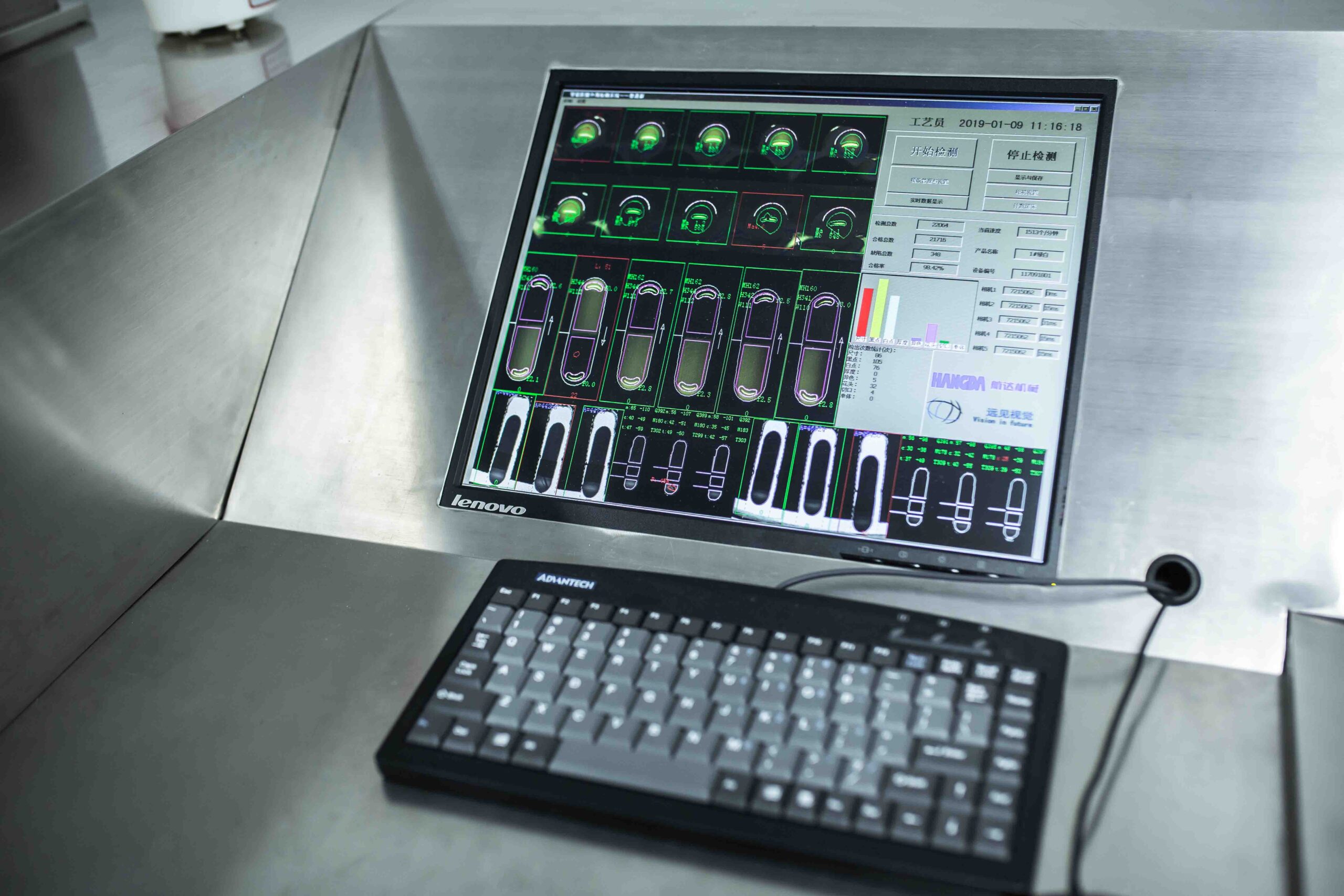
This is an issue of trust and expertise. According to USP/EP standards, weight variation testing is critical. However, these tests are sensitive to environmental conditions, especially humidity. Gelatin capsules can have a moisture content of 13-16%12 and will readily absorb or lose moisture, causing their weight to fluctuate. HPMC, on the other hand, is far more stable with a moisture content of just 4-6%. If your quality control lab uses the same environmental assumptions and parameters for HPMC as it does for gelatin, you're going to get misleading results. Your tests might show a wider variation than actually exists, leading to a false failure. We provide our clients with specific guidance for adapting their QC protocols. This ensures they test our capsules correctly and can trust their results. Furthermore, HPMC's higher density and chemical inertness create a more stable physical barrier, making it the superior choice for modern, sensitive formulations like those without Titanium Dioxide or SLS.
Conclusion
The density gap is not a flaw; it's a feature that ensures stability. Don't just look at price; audit your supplier's technical support and detailed specifications to ensure predictable, efficient production.
"Comparative Evaluation of Gelatin and HPMC Inhalation Capsule ...", https://pmc.ncbi.nlm.nih.gov/articles/PMC12299881/. A pharmacopeial or capsule-technology reference comparing empty hard capsule shell weights by polymer type would support that HPMC shells are commonly heavier than comparable gelatin shells of the same nominal size. Evidence role: statistic; source type: paper. Supports: HPMC capsules are about 10–15% heavier than equivalent gelatin capsules.. Scope note: Published values may vary by capsule size, manufacturer, grade, colorant, and moisture content, so the 10–15% range should be verified against a neutral comparative dataset rather than treated as universal. ↩
"Comparative Evaluation of Gelatin and HPMC Inhalation Capsule ...", https://pmc.ncbi.nlm.nih.gov/articles/PMC12299881/. A materials reference reporting the density of hydroxypropyl methylcellulose relative to gelatin would support the statement that polymer density can contribute to differences in shell mass. Evidence role: mechanism; source type: education. Supports: HPMC has a higher intrinsic material density than gelatin, contributing to heavier capsule shells.. Scope note: Bulk polymer density alone does not determine final capsule weight, which also depends on shell geometry, moisture, additives, and manufacturing specifications. ↩
"Comparison of the formulation requirements of dosator and dosing ...", https://pmc.ncbi.nlm.nih.gov/articles/PMC2751356/. A pharmaceutical manufacturing text or peer-reviewed review on hard capsule design would support that shell wall thickness and uniformity affect mechanical resistance during handling and filling. Evidence role: mechanism; source type: paper. Supports: Capsule wall thickness and uniformity are design factors used to improve mechanical strength.. Scope note: Such sources usually establish the general relationship between wall geometry and mechanical performance, not the proprietary design choices of a specific capsule supplier. ↩
"Capsule Size Guide: Chart, Capacity, and How to Choose", https://ruidapacking.com/complete-guide-to-capsule-size/. A pharmaceutical process validation or capsule filling reference describing tare-weight settings, in-process weight control, and checkweighing would support that empty shell mass affects equipment calibration and QC interpretation. Evidence role: mechanism; source type: institution. Supports: Differences in empty capsule weight can affect filling-machine calibration and quality-control weight testing.. Scope note: The source would support the process principle; the magnitude of impact depends on a plant’s equipment, rejection limits, and control strategy. ↩
"Predicting capsule fill weight from in-situ powder density ... - PMC", https://pmc.ncbi.nlm.nih.gov/articles/PMC6733302/. A metrology or pharmaceutical manufacturing source explaining tare weight in capsule filling would support that the empty capsule weight is subtracted or accounted for when assessing filled-capsule mass. Evidence role: definition; source type: institution. Supports: Tare weight calibration is the equipment or QC baseline related to the empty capsule shell weight.. Scope note: The source may describe tare-weight principles generally and may not address HPMC capsules specifically. ↩
"[PDF] Tare Verification: "Ensuring the Accuracy of Pre-packaged Tare"", https://www.nist.gov/document/f-030pdf. A GMP or pharmacopeial source on capsule weight-uniformity controls would support that incorrect tare or acceptance settings can cause compliant units to be rejected during weight checks. Evidence role: mechanism; source type: government. Supports: Incorrect calibration or acceptance criteria can cause false weight-uniformity rejections.. Scope note: The source would substantiate the general risk of misclassification; it would not verify the article’s specific operational example or rejection rates. ↩
"Comparative Evaluation of Gelatin and HPMC Inhalation Capsule ...", https://pmc.ncbi.nlm.nih.gov/articles/PMC12299881/. A comparative study of HPMC and gelatin capsule mechanical properties under filling or handling conditions would support whether HPMC capsules can meet mechanical-strength requirements for high-speed encapsulation. Evidence role: expert_consensus; source type: paper. Supports: HPMC capsules can have mechanical properties suitable for high-speed filling and may compare favorably with gelatin under certain conditions.. Scope note: The word “superior” requires direct comparative evidence; many neutral sources may only show adequate or different mechanical performance rather than consistent superiority. ↩
"Hydroxypropyl Methylcellulose—A Key Excipient in Pharmaceutical ...", https://pmc.ncbi.nlm.nih.gov/articles/PMC12196896/. A materials database or polymer handbook listing density values for hydroxypropyl methylcellulose and gelatin would support the physical-property comparison between the two capsule materials. Evidence role: general_support; source type: education. Supports: HPMC polymer is denser than animal-derived gelatin.. Scope note: Reported densities can differ by grade, hydration state, and measurement method, so the comparison should be interpreted as material-property context rather than a complete explanation of capsule-shell mass. ↩
"SCF1200 Automatic Capsule Filling Machine - Senieer", https://www.senieer.com/capsule-machine/automatic-capsule-filling-machine-njp-3000d/. A pharmaceutical equipment or manufacturing reference documenting output rates of industrial capsule-filling machines would support that modern machines can operate at thousands of capsules per minute. Evidence role: statistic; source type: institution. Supports: High-speed capsule filling machines can run at more than 3,000 capsules per minute.. Scope note: Machine speeds vary widely by model, capsule size, formulation, and operating conditions; a general equipment reference would not prove that every line runs at this speed. ↩
"Evaluation and Characterization of Hard-Shell Capsules Formulated ...", https://pmc.ncbi.nlm.nih.gov/articles/PMC9611240/. An independent capsule specification table or pharmacopeial reference for empty capsule dimensions and weights would support the representative weight ranges shown for standard capsule sizes. Evidence role: statistic; source type: institution. Supports: Standard capsule sizes have typical empty-shell weight ranges that differ between gelatin and HPMC capsules.. Scope note: The table’s exact milligram ranges are likely supplier- and formulation-specific; neutral sources may validate typical ranges only approximately. ↩
"Comparative Evaluation of Gelatin and HPMC Inhalation Capsule ...", https://pmc.ncbi.nlm.nih.gov/articles/PMC12299881/. A peer-reviewed review or pharmacopeial excipient reference comparing water content in HPMC and gelatin hard capsules would support that HPMC capsules generally contain less moisture than gelatin capsules. Evidence role: statistic; source type: paper. Supports: HPMC capsules typically have lower and more stable moisture content, around 4–6%, than gelatin capsules.. Scope note: Moisture values depend on storage humidity, capsule grade, and analytical method; the 4–6% range should be cited as typical rather than absolute. ↩
"Evaluation and Characterization of Hard-Shell Capsules Formulated by ...", https://pmc.ncbi.nlm.nih.gov/articles/PMC9611240/. A pharmaceutical excipient or capsule-technology source reporting the equilibrium moisture content of hard gelatin capsules would support the stated 13–16% moisture range. Evidence role: statistic; source type: paper. Supports: Hard gelatin capsules commonly contain about 13–16% moisture under typical storage conditions.. Scope note: The range is condition-dependent because gelatin capsules equilibrate with ambient relative humidity; sources may report a broader range under different storage conditions. ↩